Cinescape , Beyond The Algorithim
Project Description
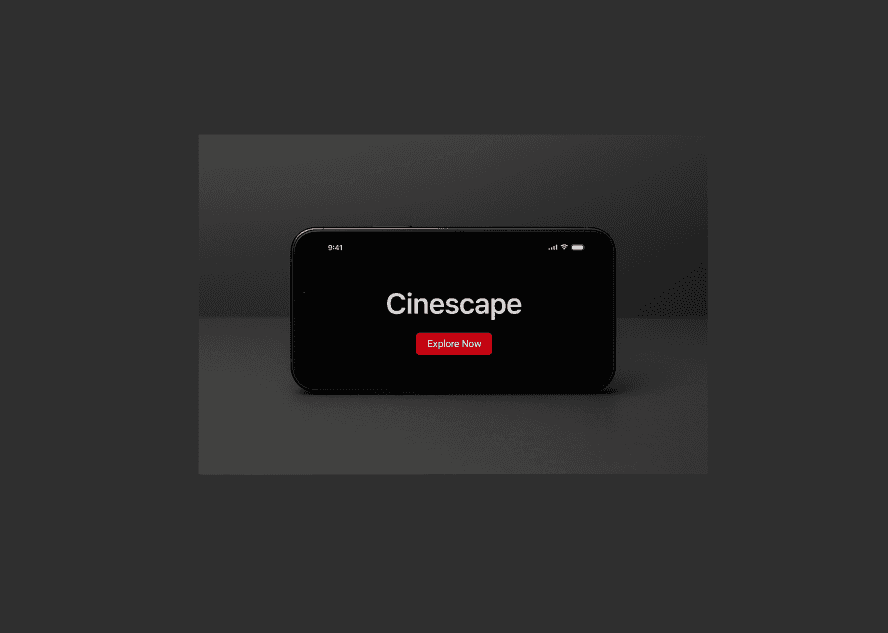
Cinescape is a personal UX/UI design project focused on reinventing how people discover movies online. In today’s streaming era, users often feel overwhelmed by endless options and disconnected from the generic, algorithm based recommendations. Cinescape aims to solve this by creating a curated, emotion-driven discovery platform.
The goal was to design a responsive website that helps users find hidden cinematic gems based on how they feel not just what’s trending. With intuitive mood filters like Wholesome, Dark, Slow Burn, and Feel-Good, Cinescape allows users to explore meaningful films that align with their current state of mind.
This case study showcases my end-to-end process from identifying user pain points and defining core problems, to wireframing, prototyping, and refining the final design. Cinescape is built to turn aimless scrolling into a focused, emotionally engaging experience for film lovers.
Time Line
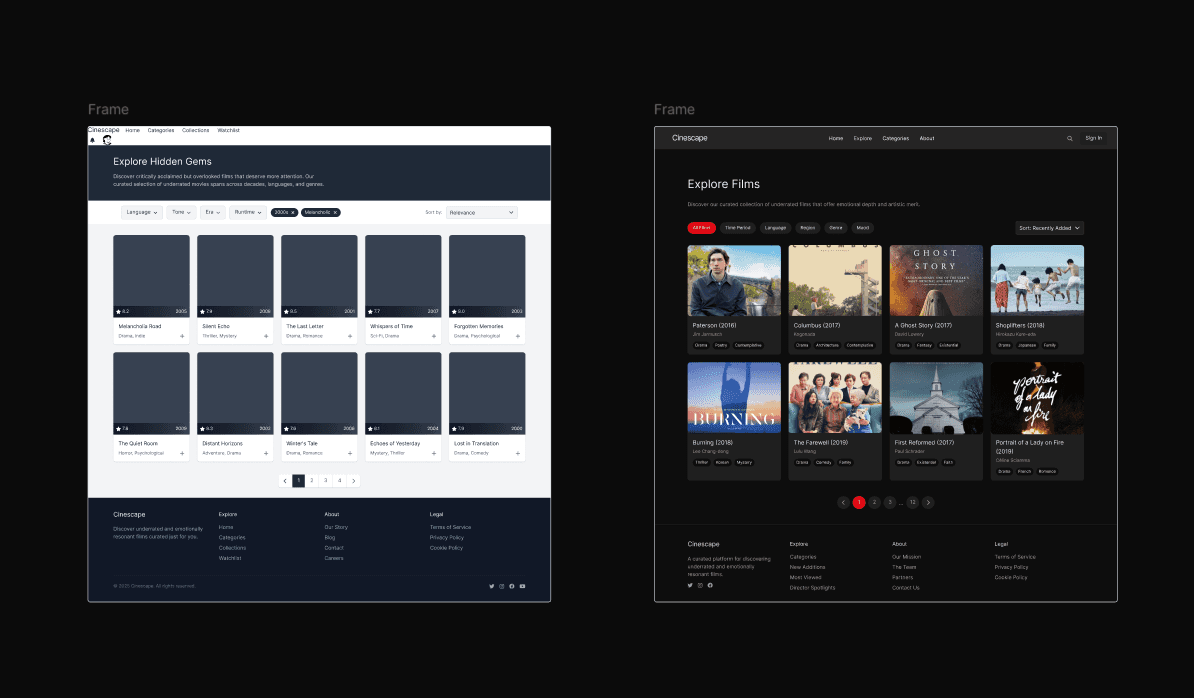
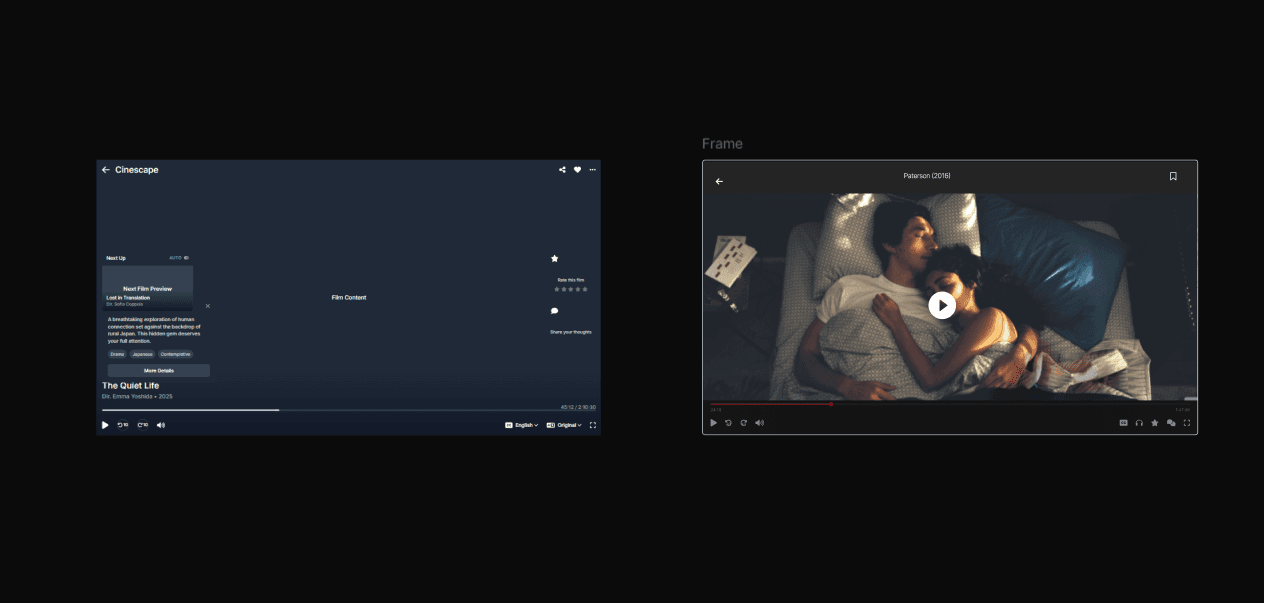
Cinescape was developed over a focused five-week sprint, following a user-centered design process. I began with research to understand user frustrations and the need for emotional filtering in movie discovery. Based on insights, I created personas, mapped user journeys, and designed wireframes for key pages. High-fidelity mockups were then crafted with cinematic visuals and a minimal aesthetic. After gathering feedback, I refined the UI and finalized responsive layouts to ensure a seamless experience across devices, preparing the project for case study present.ation
Problem
With the rise of streaming platforms, users are overwhelmed by endless choices and algorithm driven suggestions. While these platforms prioritize popularity and trends, they often fail to consider a user’s emotional state or the mood they’re in when choosing a film.
Process
The design of Cinescape followed a structured UX process rooted in empathy, exploration, and iteration. Each phase focused on understanding user needs and crafting an emotionally engaging movie discovery experience.
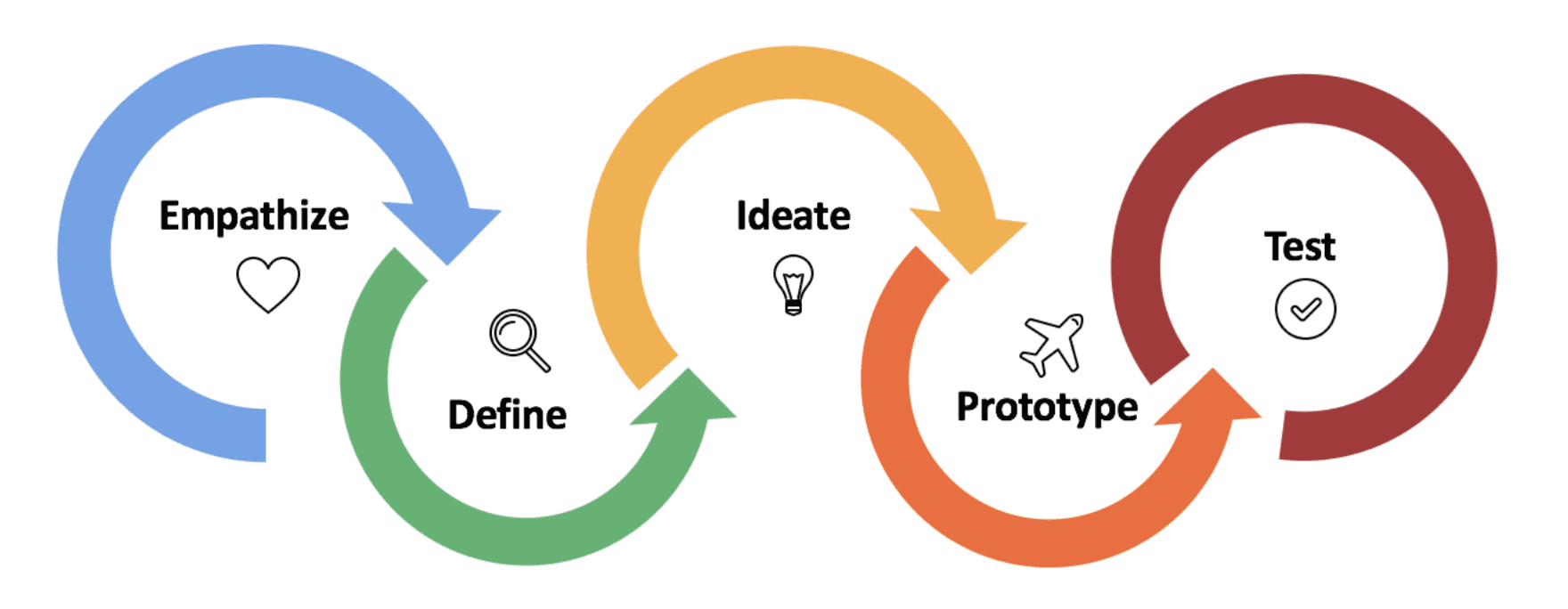
Empathize
Started with qualitative research by engaging with movie lovers who feel overwhelmed by streaming platforms. Conversations revealed that users seek more emotional and intentional recommendations, not just trending content.
Define
Synthesized findings to identify the core issue: users crave a curated space where films are recommended based on mood, not algorithms. This insight formed the foundation for all design decisions moving forward.
Ideate
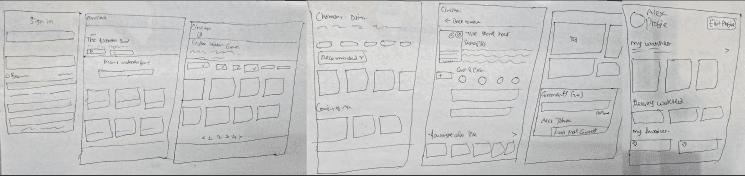
Brainstormed features like emotion based filters, curated categories, and minimal navigation. Sketched wireframes that emphasized simplicity, cinematic appeal, and emotional storytelling.
Prototype
Built low- and high-fidelity prototypes focused on mood-first navigation and aesthetic storytelling. Prioritized smooth transitions and intuitive layouts to create a relaxed discovery environment.
Test
Conducted usability tests and peer feedback sessions. Iterated on pain points like filter clarity, navigation hierarchy, and visual balance. Each round of feedback improved the clarity, emotional impact, and usability of the platform.
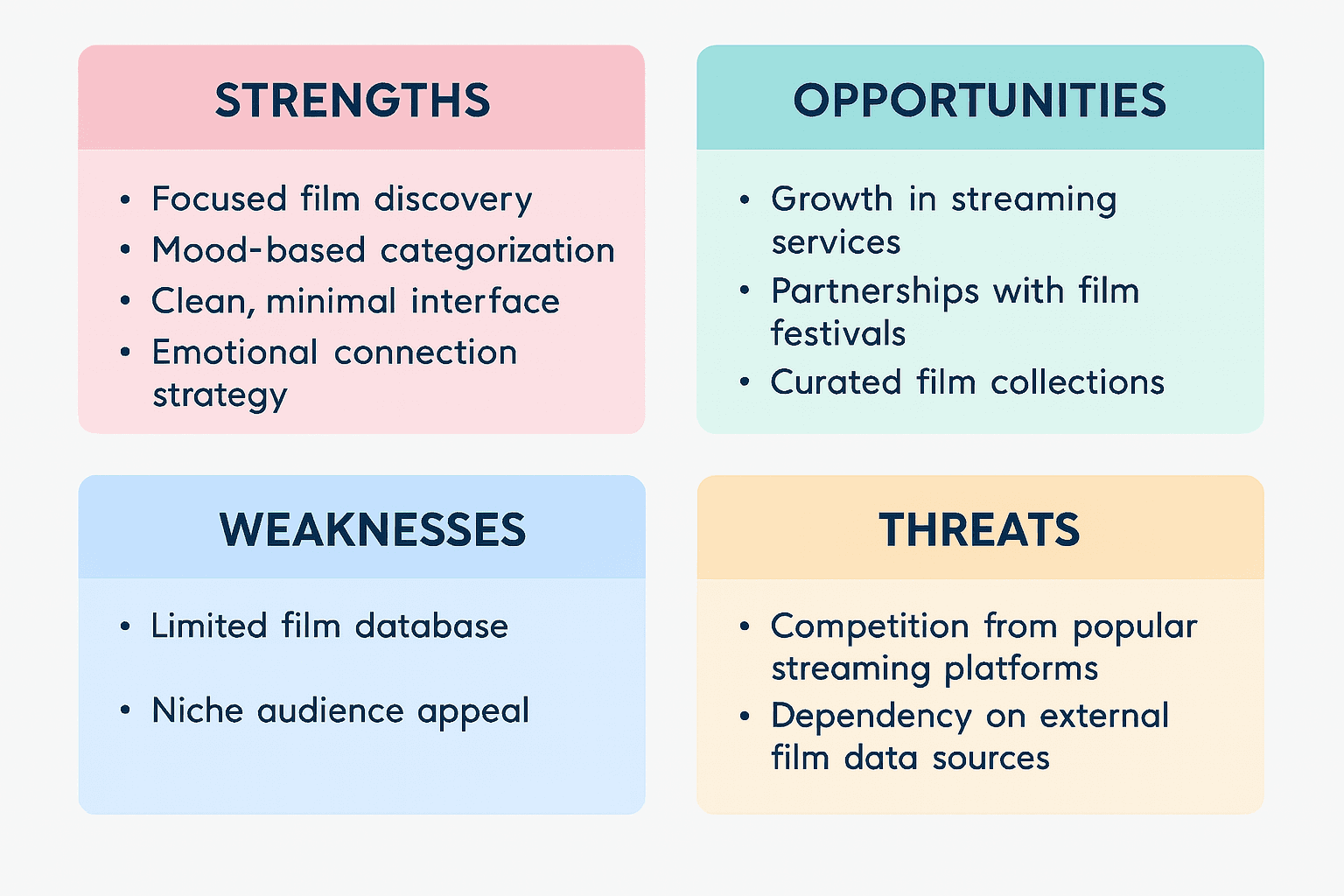
SWOT Analysis
User Surveys & Interviews
To shape a user-centered design for Cinescape, I conducted both surveys and in depth interviews with individuals who regularly explore films online. The goal was to understand their discovery habits, emotional needs, and frustrations with existing streaming platforms.
The surveys gathered quantitative data about how users currently discover movies, what influences their choices, and how often they rely on algorithms. Meanwhile, interviews provided deeper insights into emotional motivations, preferences for mood-based viewing, and why many feel uninspired by generic recommendations.
Participants commonly expressed that they often scroll endlessly or rewatch old favorites due to decision fatigue. These findings directly informed the design strategy prioritizing intentional browsing, emotional filters, and curated content to improve discoverability and user satisfaction.
User Takeaways
Through surveys and interviews, users revealed a deep frustration with current film discovery platforms. They described feeling overwhelmed by endless content and uninspired by algorithm based suggestions that often missed their emotional intent.
Most users wanted a more meaningful, mood aligned experience one that helps them discover hidden cinematic gems rather than rewatching the same popular titles. Emotional resonance, atmosphere, and tone were cited as more important than genre or popularity.
These takeaways highlighted the demand for a curated, mood driven platform that values quality over quantity guiding the foundation of Cinescape’s design direction.
Card Sorts & Affinity Mapping
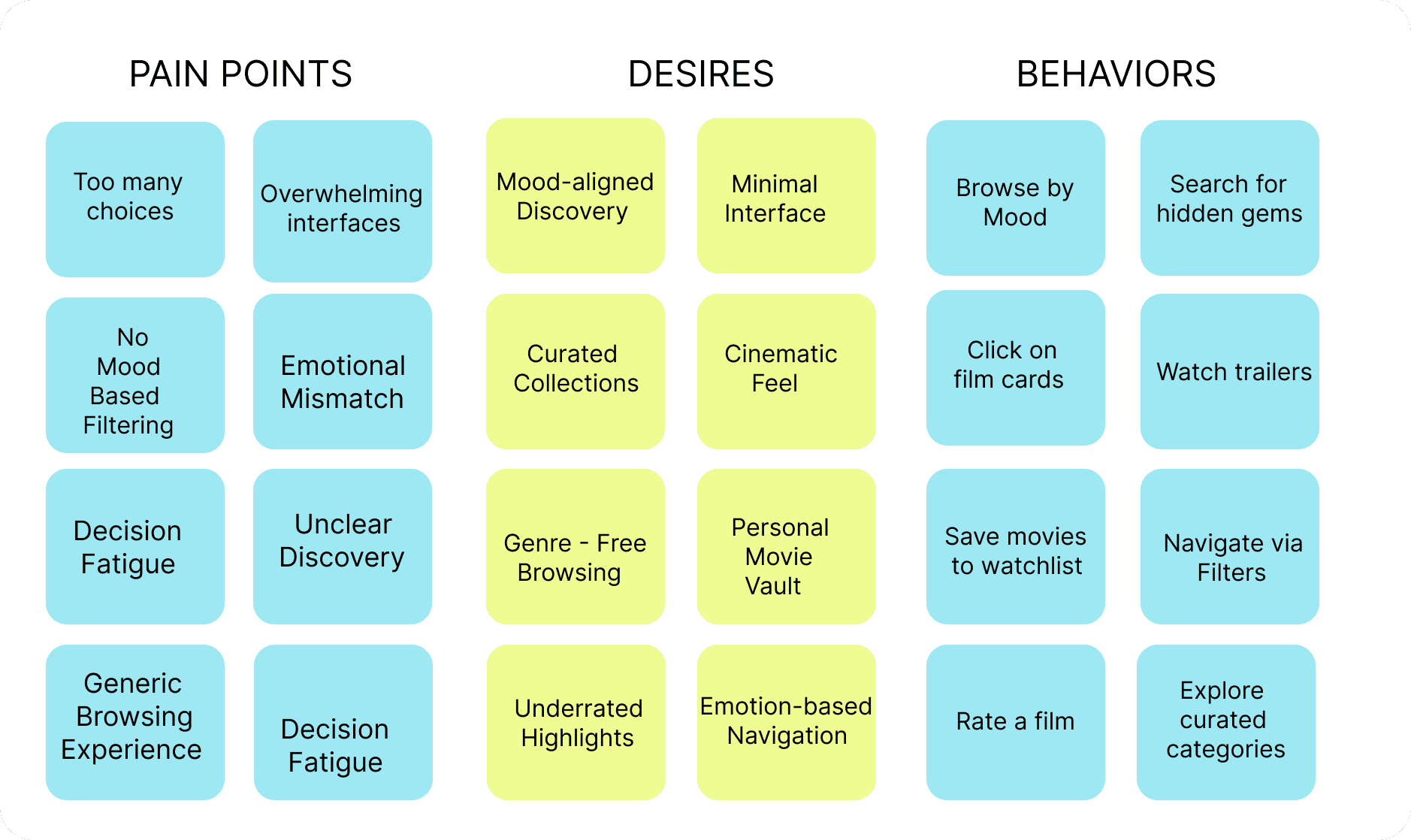
To shape Cinescape’s information architecture, I conducted open card sorting sessions with potential users. Participants grouped a variety of content labels such as “Feel Good,” “Slow Burn,” and “Character Driven” based on their mental models. This helped reveal how users instinctively categorize movies when searching by mood or emotion.
Following the card sort, I used affinity mapping to cluster themes and feedback gathered from surveys and interviews. Insights like “too many choices,” “I don’t know what I’m in the mood for,” and “popular picks aren’t personal” were grouped into broader categories like decision fatigue, emotional discovery, and curation desire.
These exercises provided a clear path for structuring the site’s filters, mood tags, and category pages ensuring the experience aligned with user expectations and reduced friction in the discovery journey.
Meet the User Persons & User Journeys
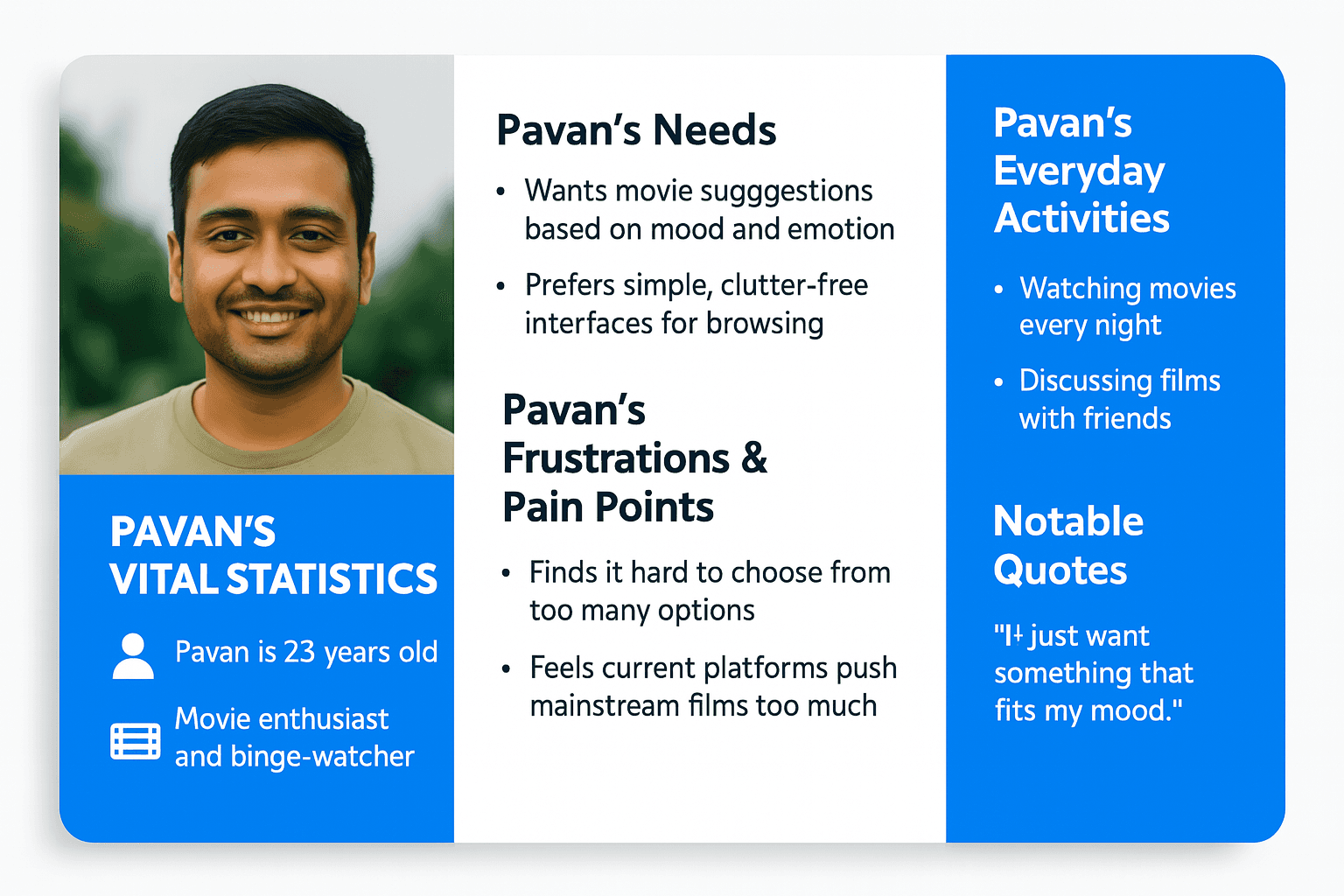
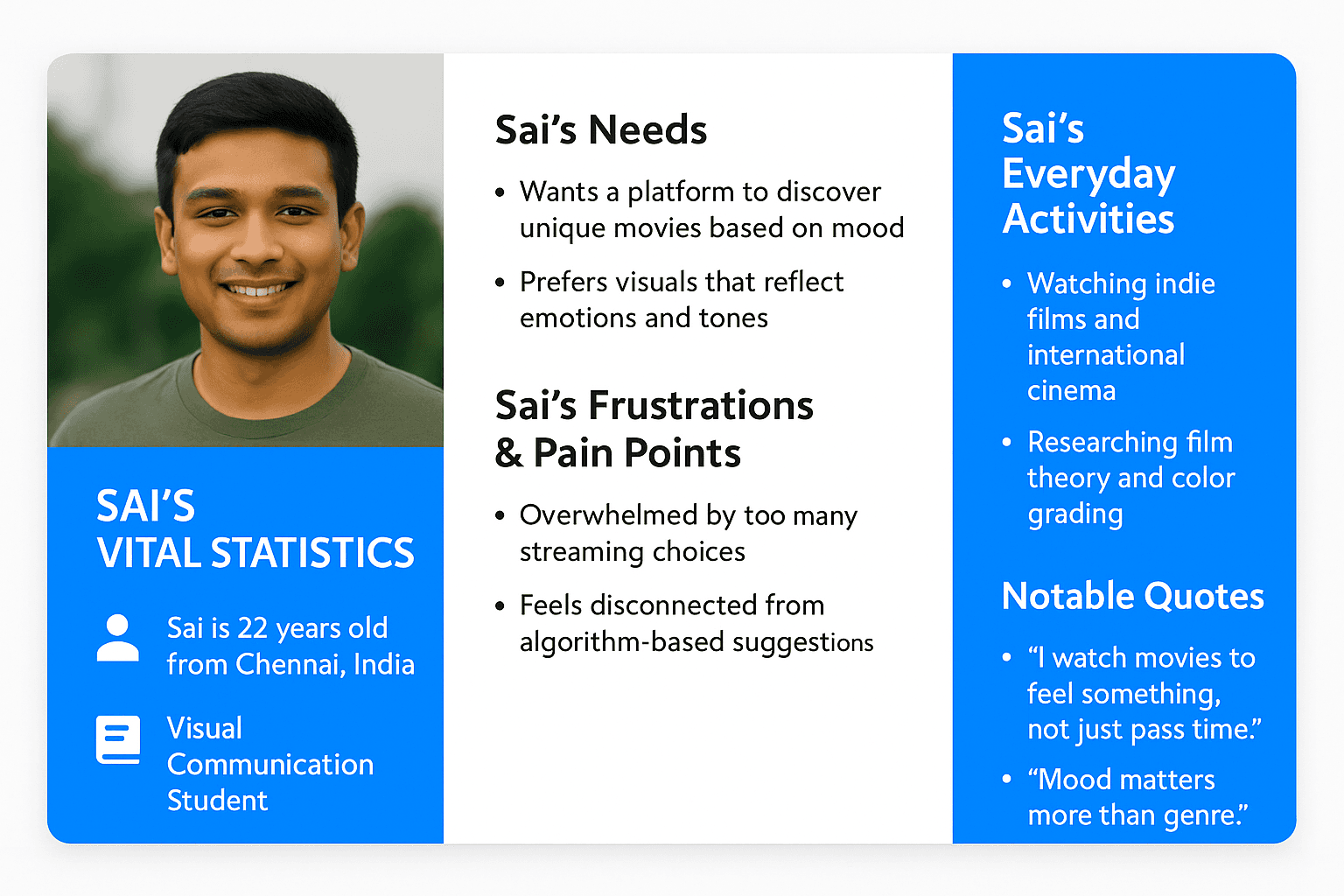
To guide the design process, I created user personas based on insights from surveys and community observations. These personas represented a range of users from casual viewers seeking emotionally resonant films to cinephiles looking for curated recommendations tailored to their mood. Each persona reflected different motivations, viewing habits, and frustrations with traditional movie platforms.
The personas revealed challenges such as decision fatigue, a lack of emotional filtering, and frustration with algorithm driven suggestions that felt impersonal. These insights directly inspired core features like mood-based filters, curated collections, and minimalist, immersive browsing.
I also mapped out their user journeys to visualize how each persona would interact with Cinescape from landing on the homepage to selecting a mood, browsing suggestions, and discovering new films. This process helped ensure a seamless, emotionally connected experience that worked for all types of movie lovers.
Usability Testing
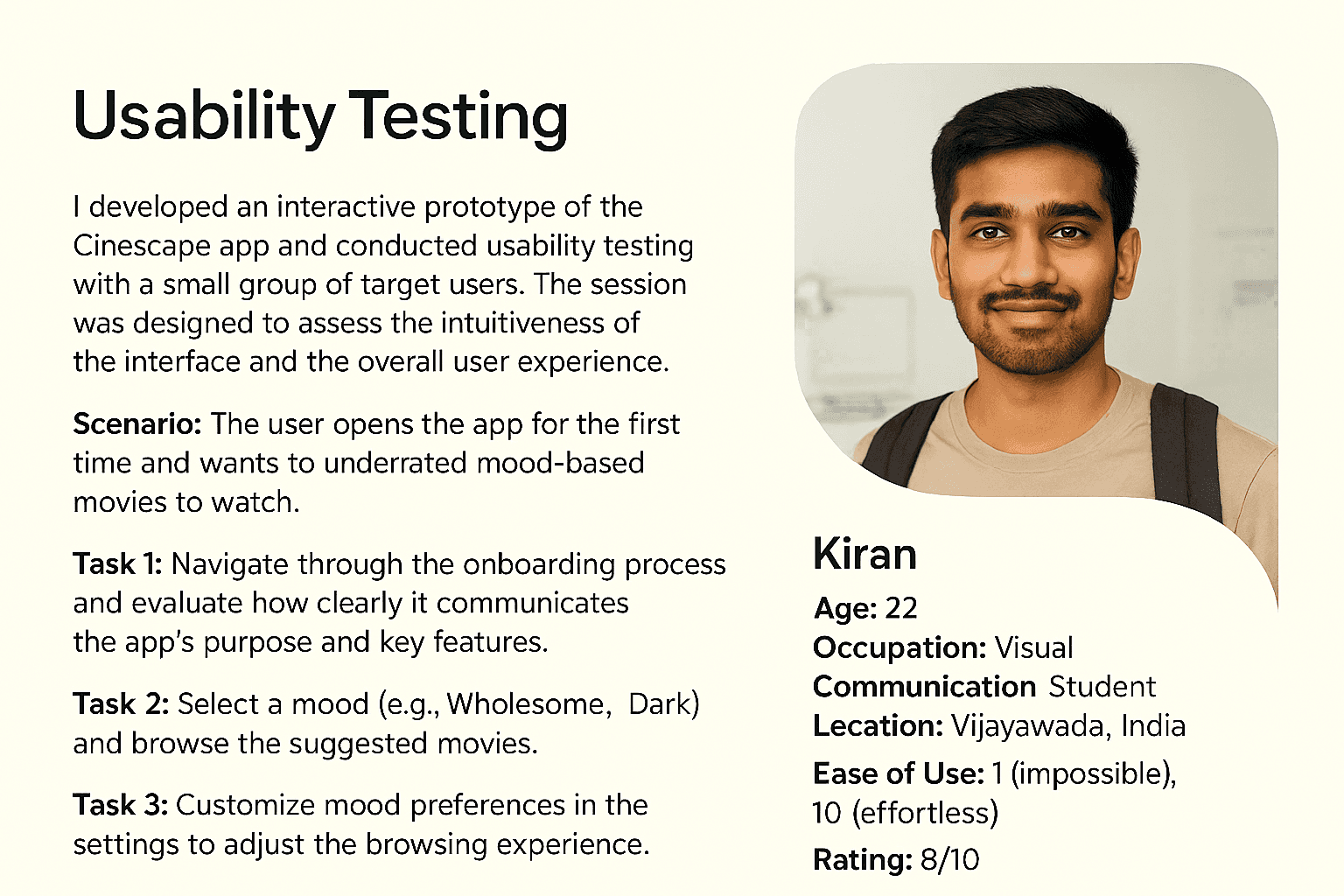
After testing the initial Cinescape prototype with users, I gathered valuable feedback on how they interacted with mood based film discovery. Participants were asked to perform tasks such as selecting a mood, browsing curated movie lists, and viewing detailed information about selected films.
Users praised the clean, cinematic interface and the emotional clarity of the mood filters. However, some found it difficult to distinguish between similar moods and wanted more context behind film recommendations, including genre tags and brief emotional descriptions.
These insights led to refinements in the UI, such as more descriptive mood labels, subtle animations to enhance transitions, and quick access metadata for each movie card. The result was a more engaging, emotionally intuitive experience that better connected users with the right films for how they felt.
Results
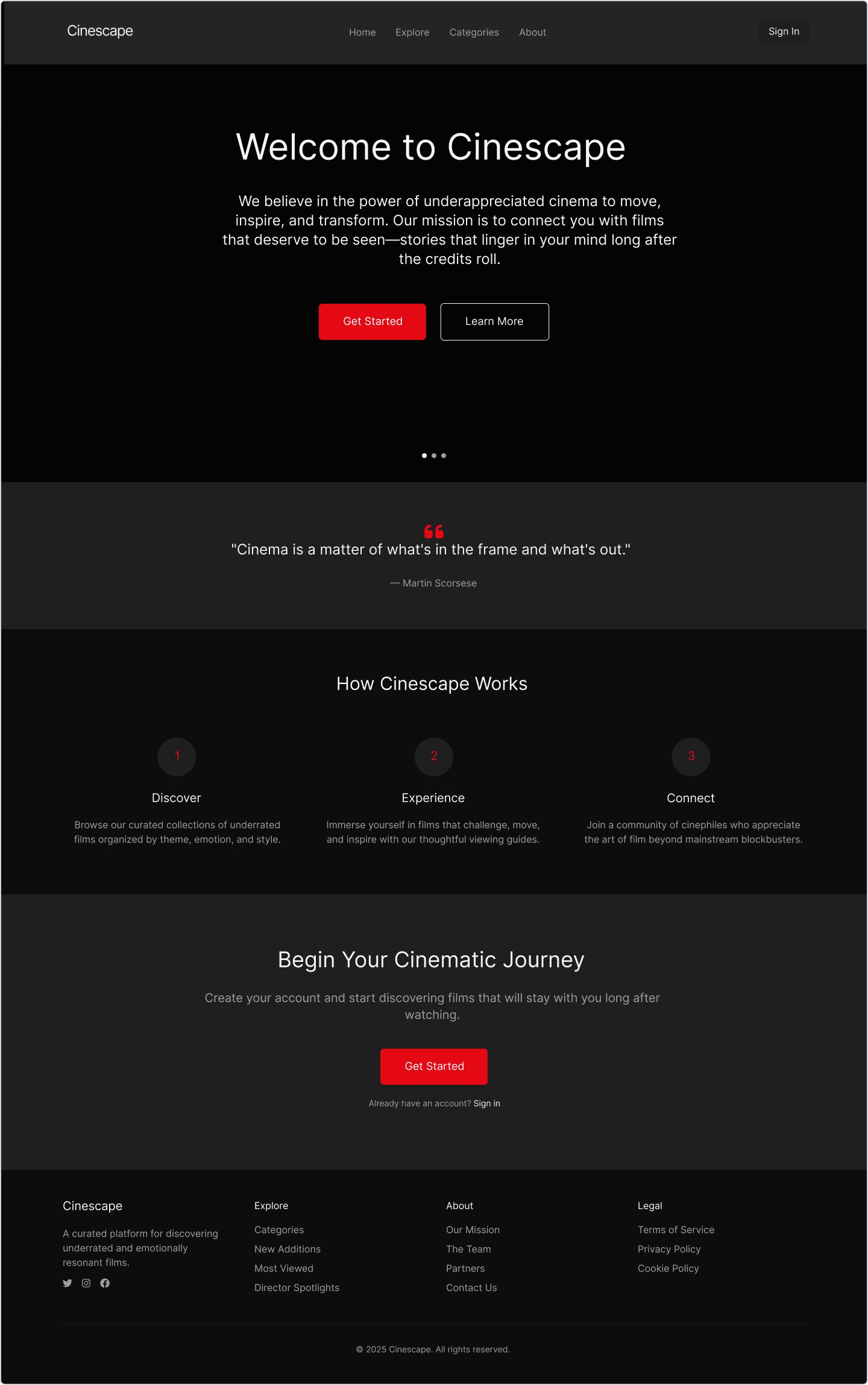
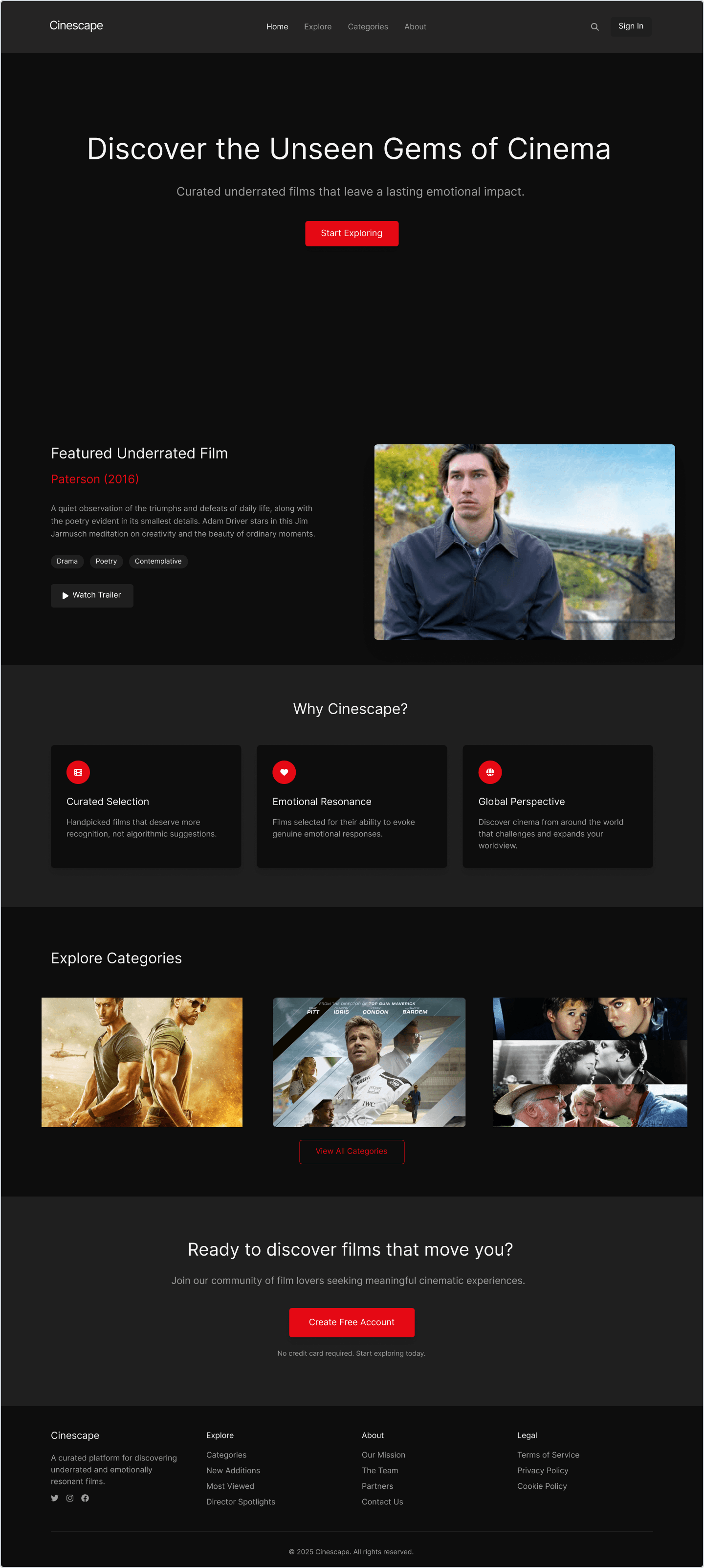
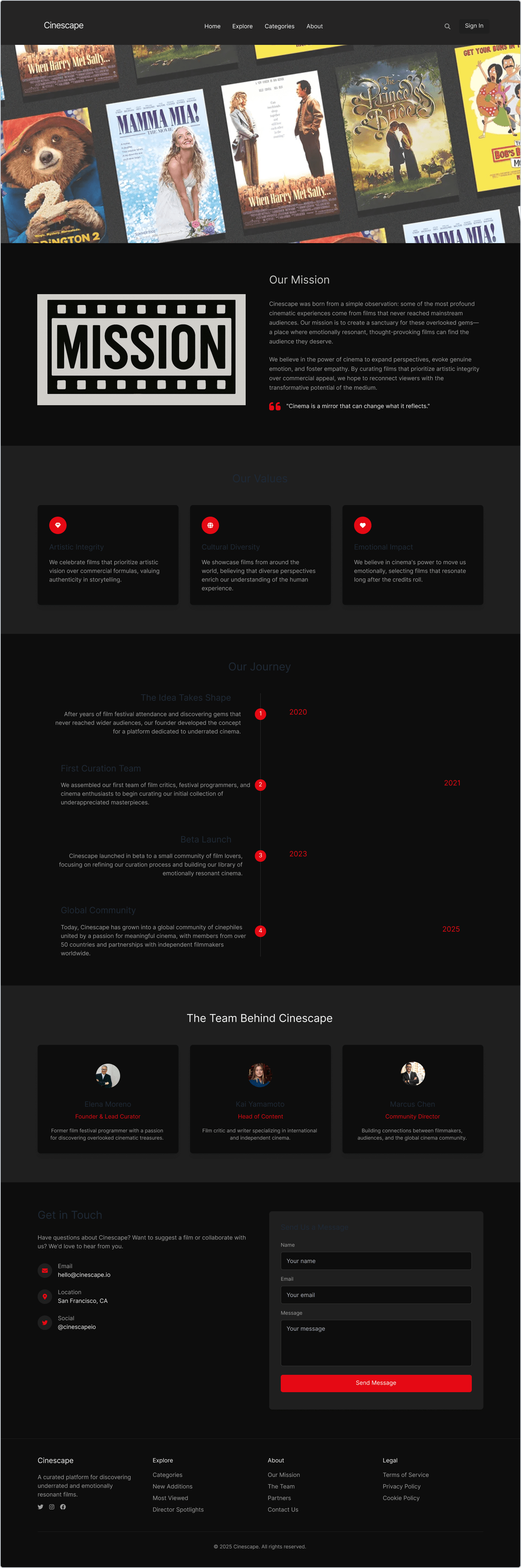
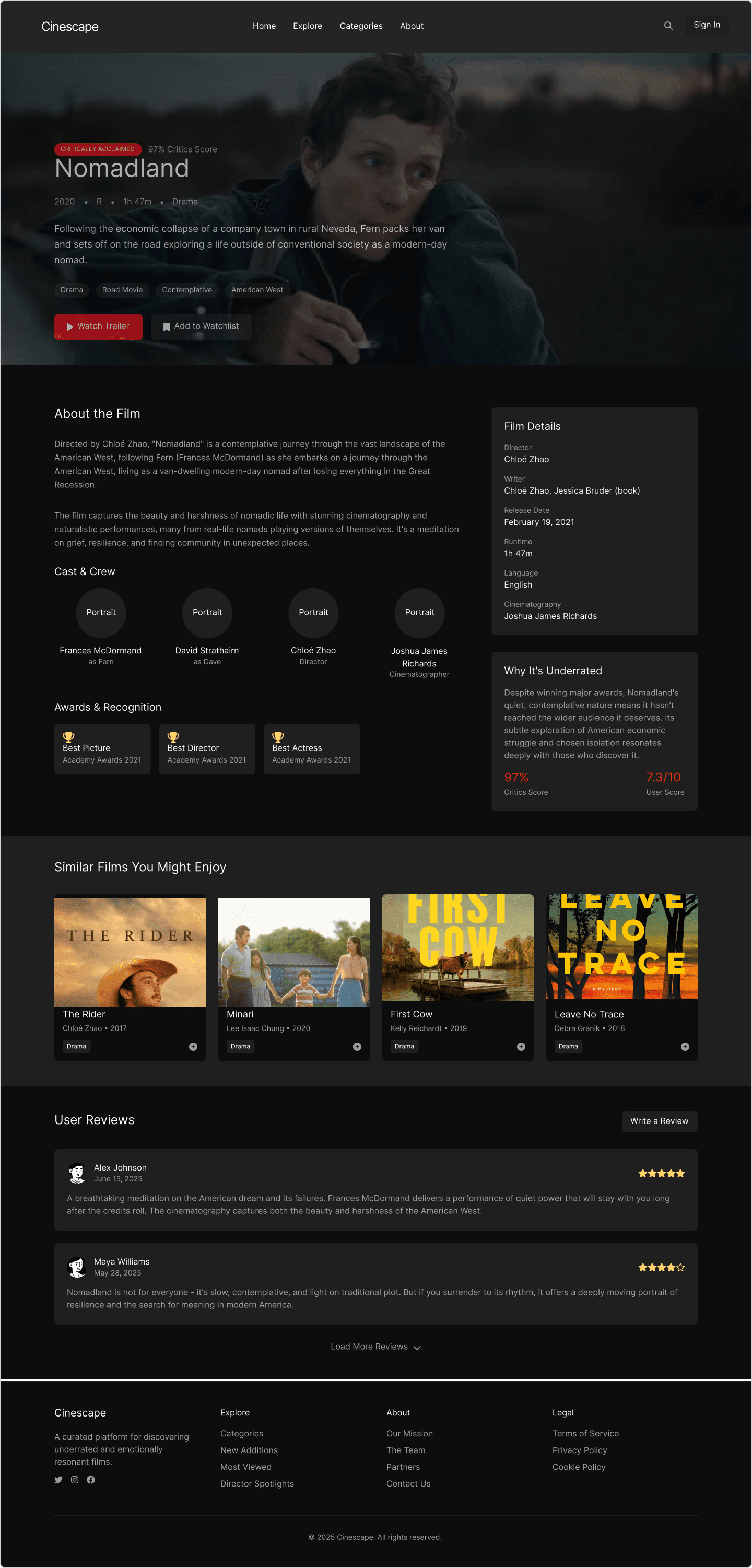
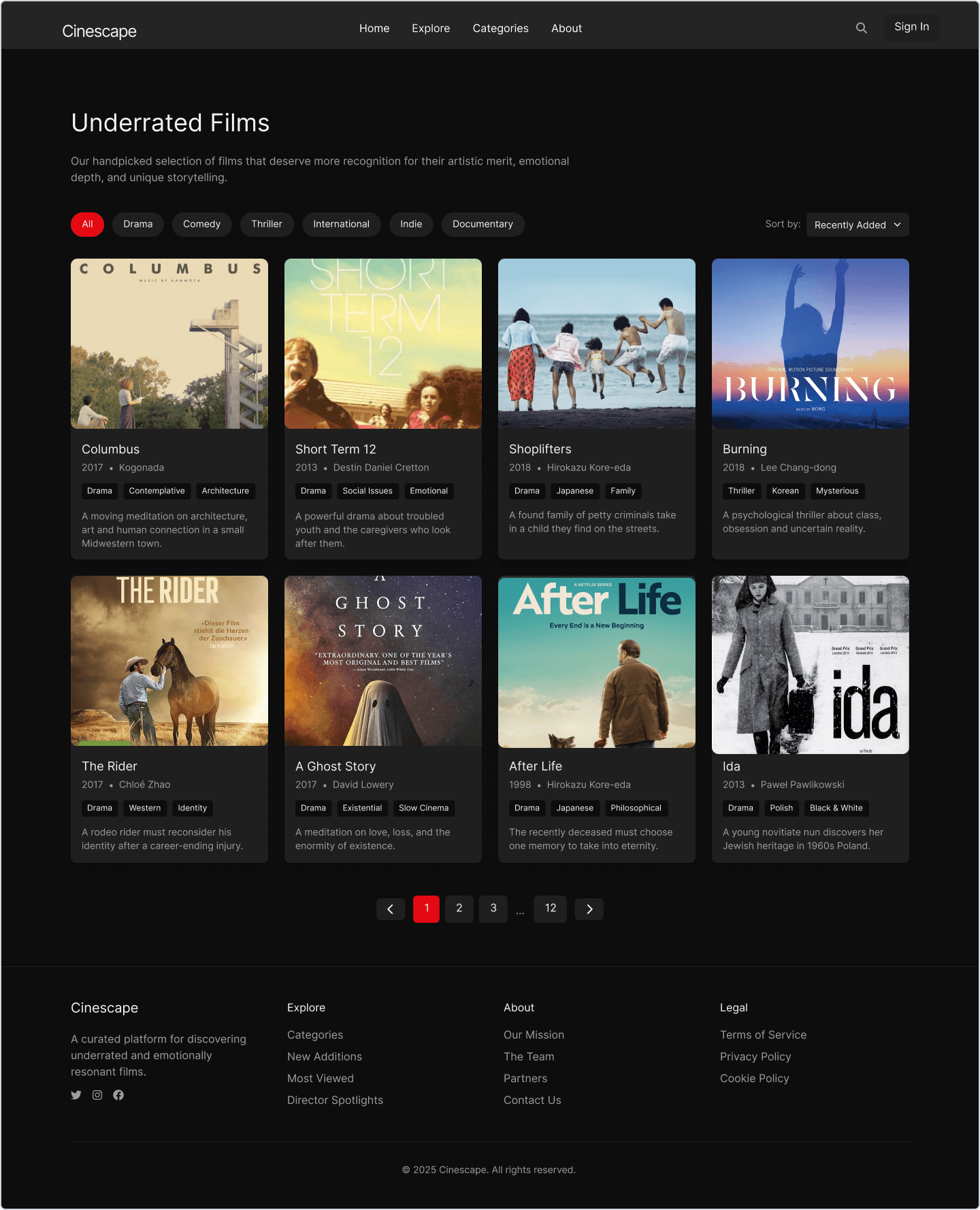
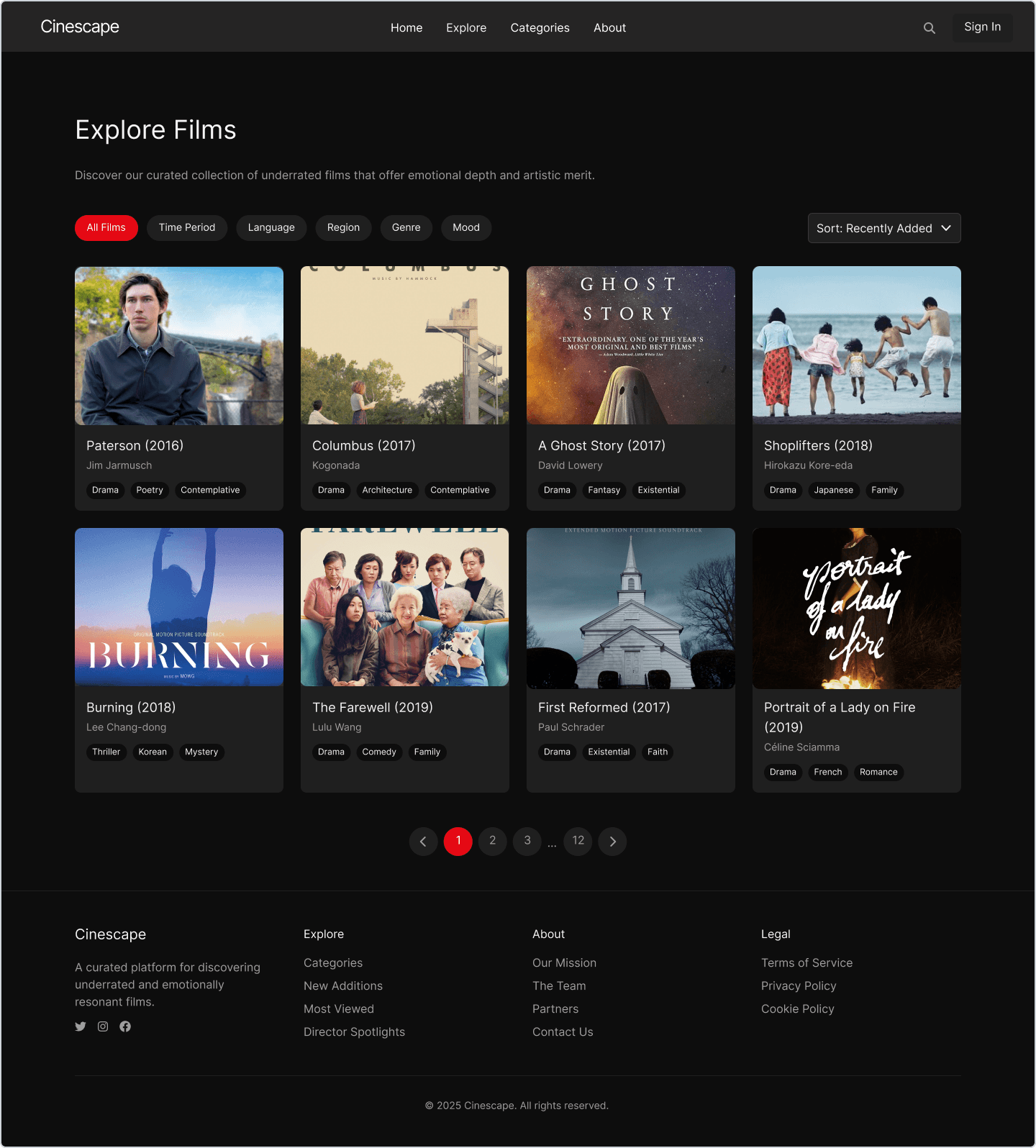
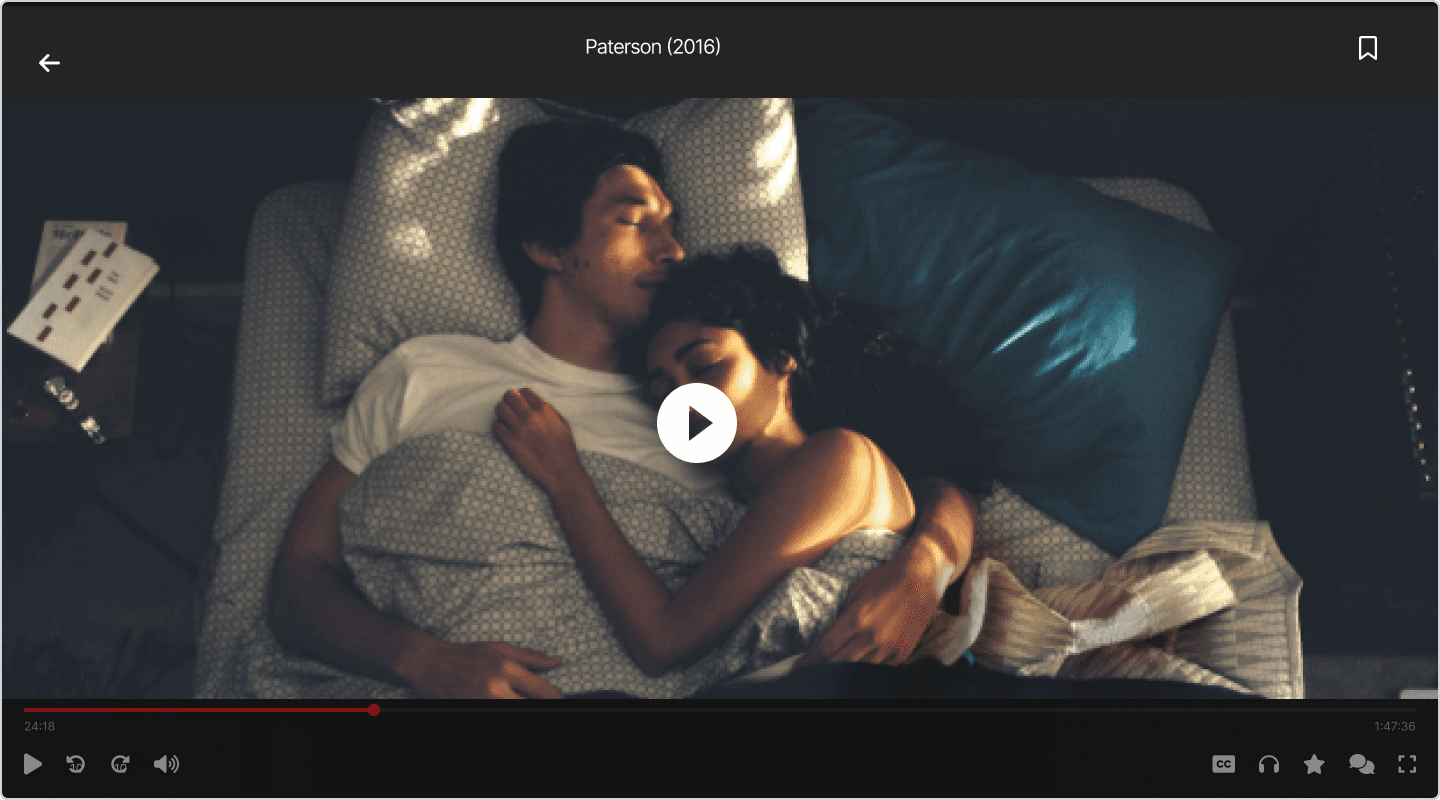
The final outcome of Cinescape was a functional, high-fidelity prototype that delivered a clean, emotionally-driven film discovery experience. Core features like mood-based filters, curated movie cards, and the immersive detail view were well received during usability testing.
Users appreciated the minimal layout, cinematic visuals, and how the platform made it easy to find films that matched their emotional state. They especially valued the curated approach over algorithm-heavy suggestions and the clarity provided by genre and mood tagging.
One area for future improvement was enhancing personalization over time, as some users expressed interest in evolving mood suggestions based on past interactions. Overall, this project helped me grow in designing emotionally resonant experiences, simplifying content-heavy interfaces, and creating platforms that feel both personal and purposeful.
What Cinescape taught me
Cinescape taught me the value of designing for emotion, simplicity, and intentional discovery. I learned that meaningful user experiences go beyond functionality—they resonate when they align with how people feel and what they need in the moment.
Through this project, I deepened my skills in designing for emotional engagement, curating content experiences, and creating interfaces that feel both cinematic and personal. It reminded me that great UX isn’t just about guiding users—it’s about helping them connect, reflect, and discover in ways that feel authentic and effortless.
Paper Wireframes
Digital Wireframes
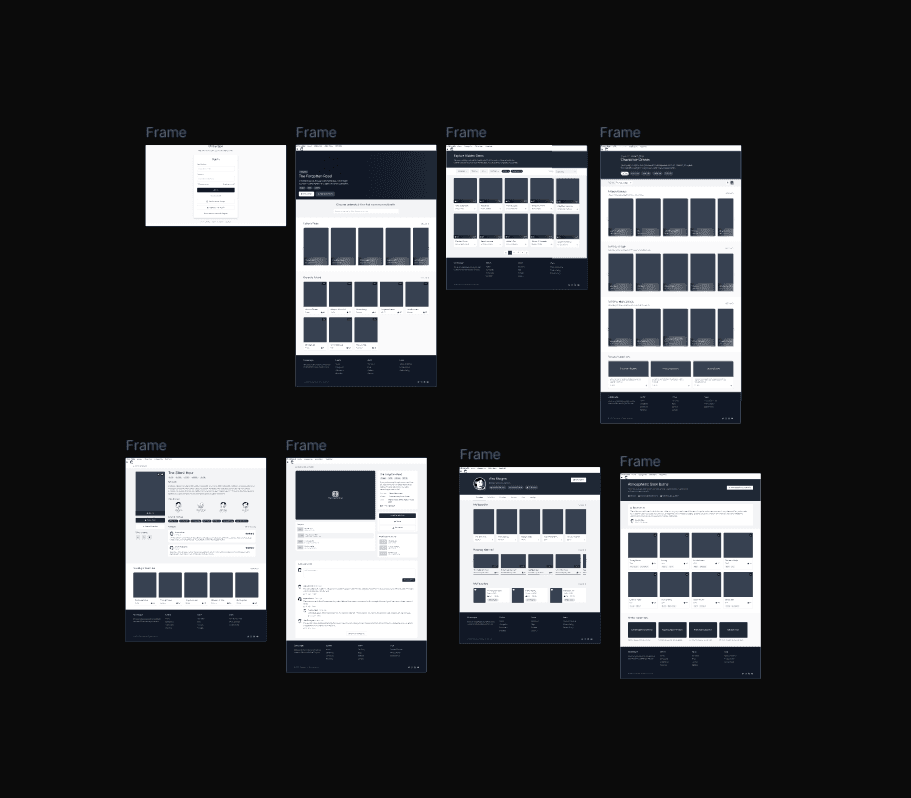
High - Fidelity Screens
Tools Used