“Where Calm Meets Sound.”
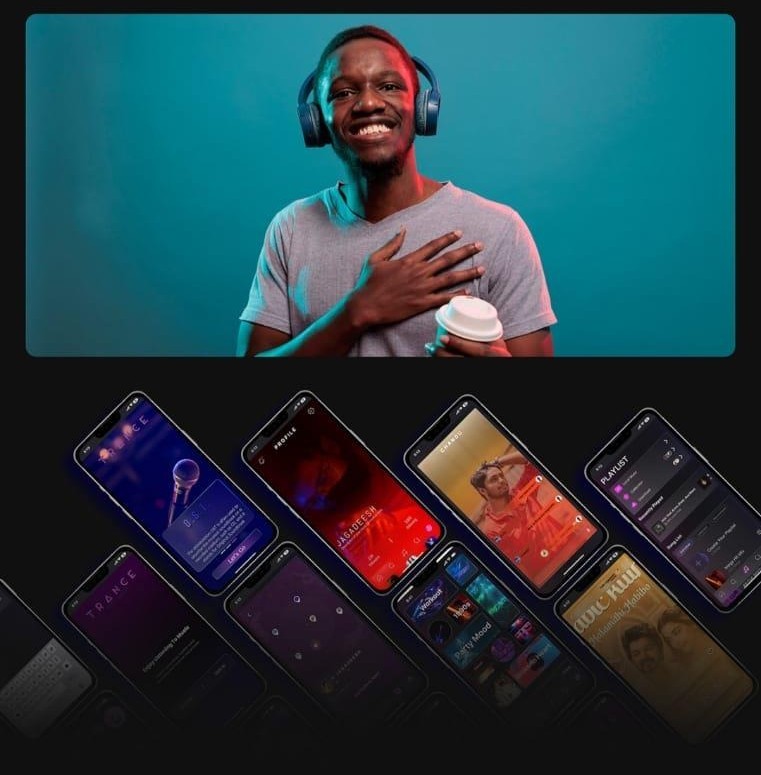
Project description
Trance is a music app designed to help users discover and listen to mood based, immersive music for focus, relaxation, and emotional balance. The goal was to create a clean, distraction free environment where users could intuitively navigate and enjoy personalized playlists, all while enhancing their mental well being.
This project stemmed from the growing need for an alternative to cluttered, algorithm driven platforms. With a focus on simplicity and emotional connection, Trance delivers a calming audio experience through a thoughtfully designed user interface and seamless functionality.
Time Line
The Trance app was developed through a focused five-week sprint that balanced research, ideation, and execution in a user-centered workflow. I began with user interviews to understand how people use music for relaxation and focus, identifying key emotional needs and pain points. Insights shaped the app’s goals and features, leading to user journey maps and mood based playlist concepts. I then created low-fidelity wireframes and designed intuitive flows, followed by high-fidelity mockups with a calm, immersive aesthetic. After usability testing, I refined the visuals and interactions to ensure a polished, consistent experience from start to finish.
Problem
Most music apps today focus on entertainment and trending playlists, but they often ignore the emotional and mental wellness of users. People looking to relax, focus, or de-stress are left scrolling through endless options that don’t truly match their mood or support mindful listening.
There’s a clear gap for an app that offers a calming, mood-based music experience with a minimal interface. Users need a more intentional way to discover music that helps them feel grounded, centered, and emotionally in tune.
Process
The design of Trance followed a user-centered approach grounded in empathy, research, and iteration. Every decision was shaped by real user needs, aiming to build a calm and purposeful music experience.
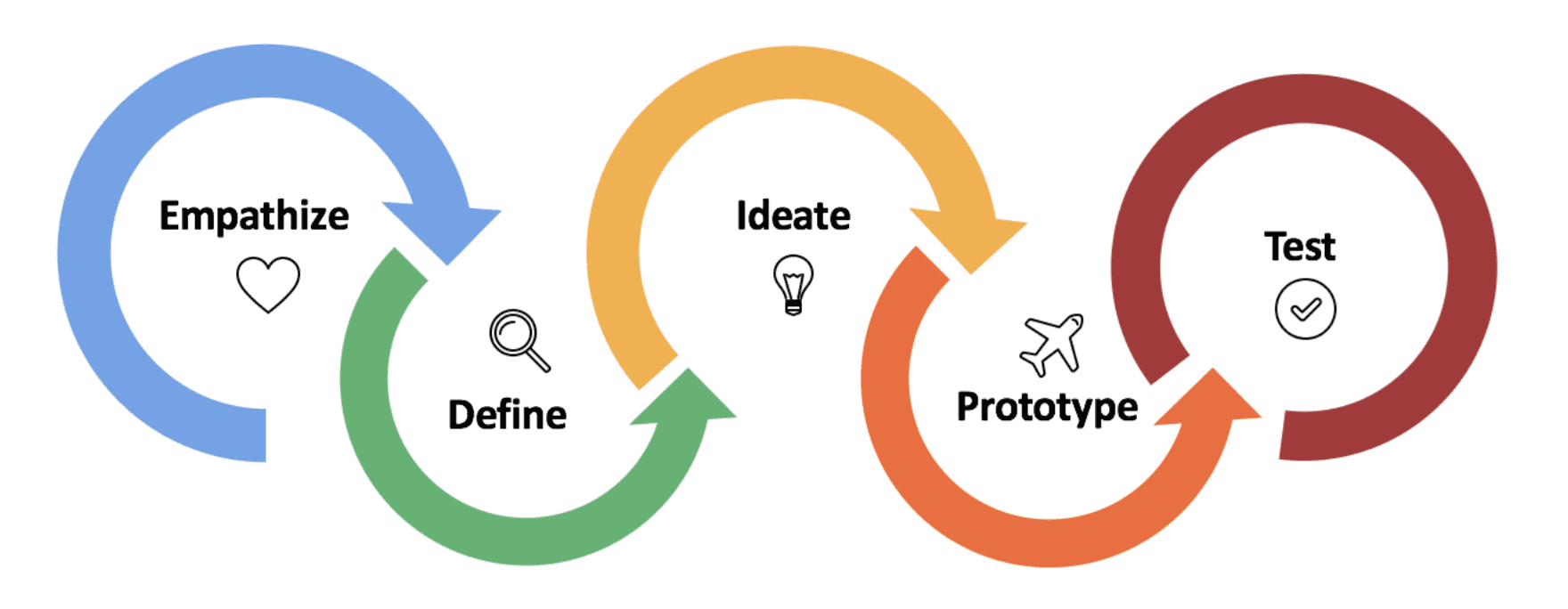
Empathize
Engaged with users through surveys and interviews to understand their music habits and emotional needs. Discovered frustration with cluttered apps and a desire for simplicity and emotional support.
Define
Identified the core problem:
Users want a calm, mood based music experience that supports emotional well being without distractions.
Ideate
Brainstormed solutions like mood filters, offline playback, timers, and a distraction free interface focused on minimalism and ease of use.
Prototype
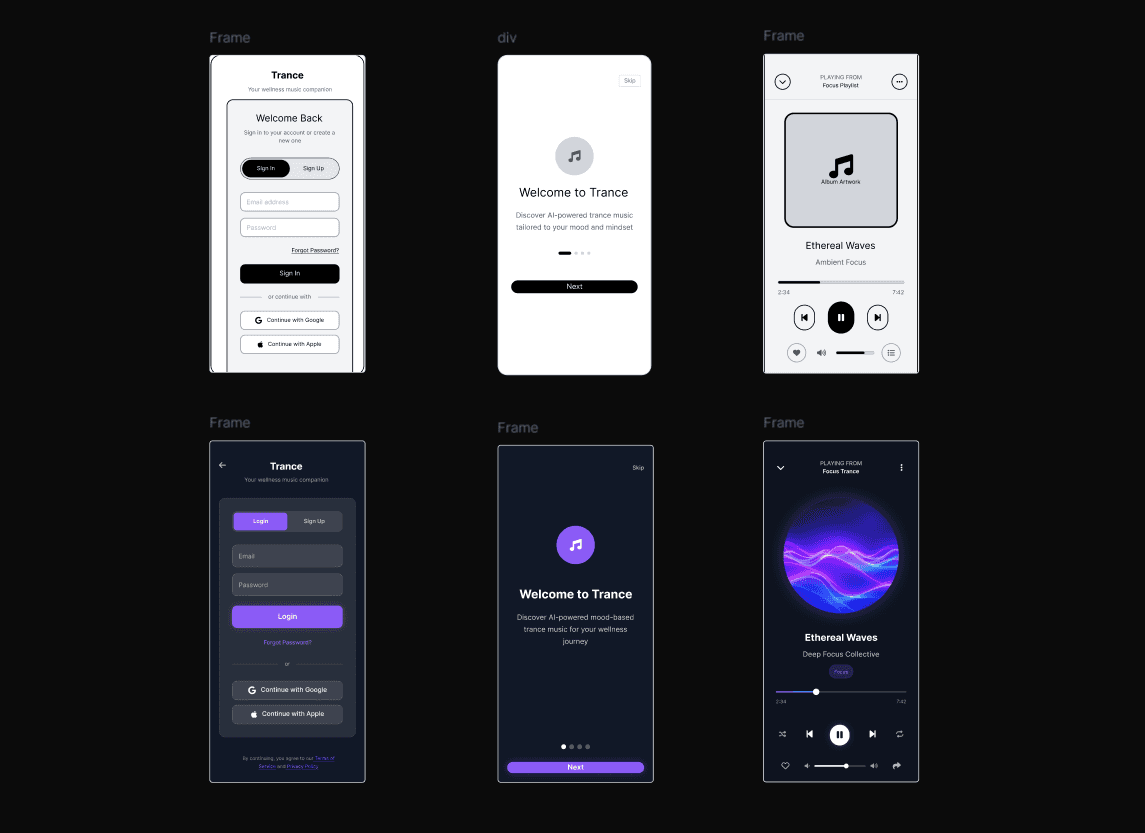
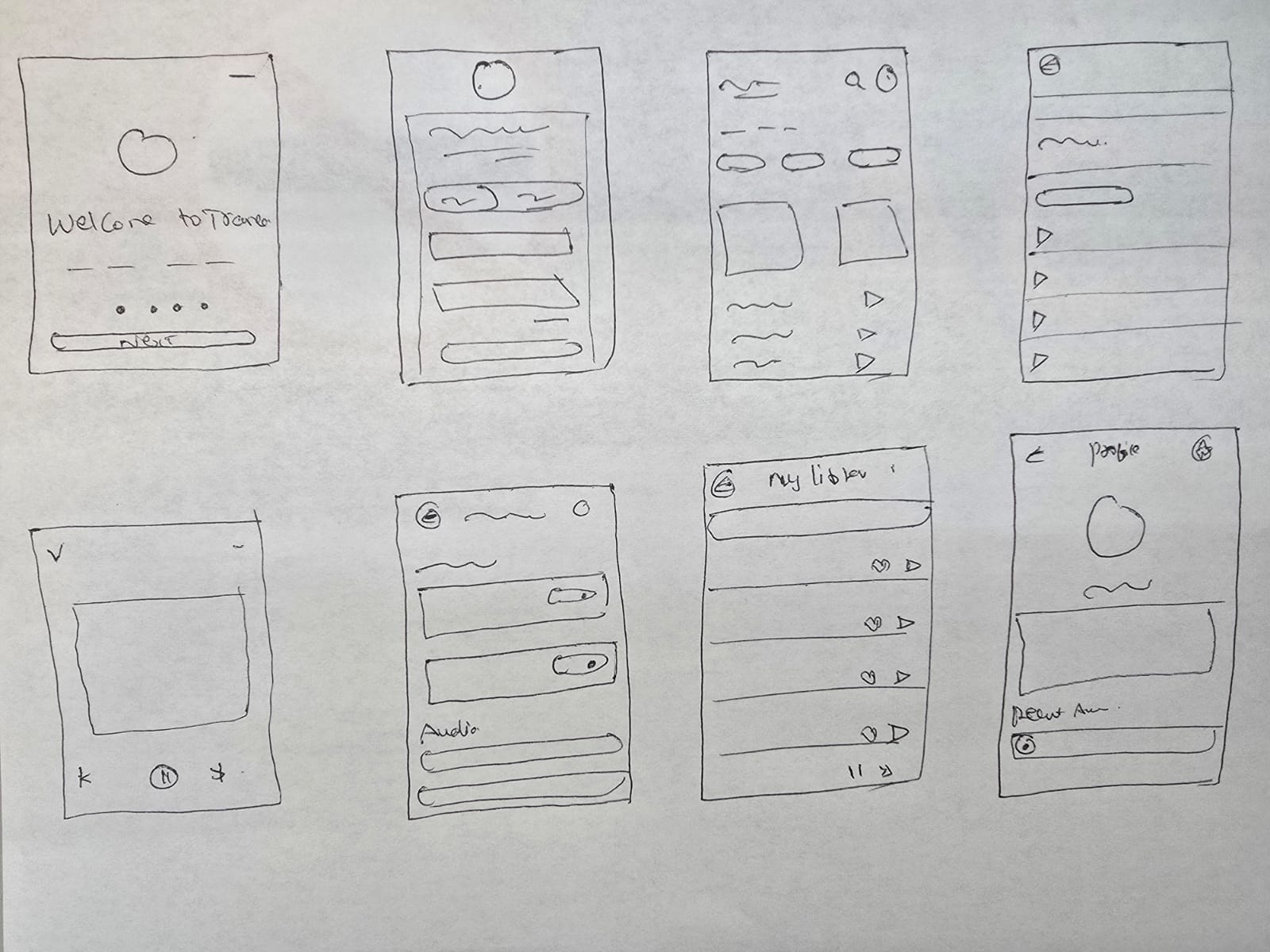
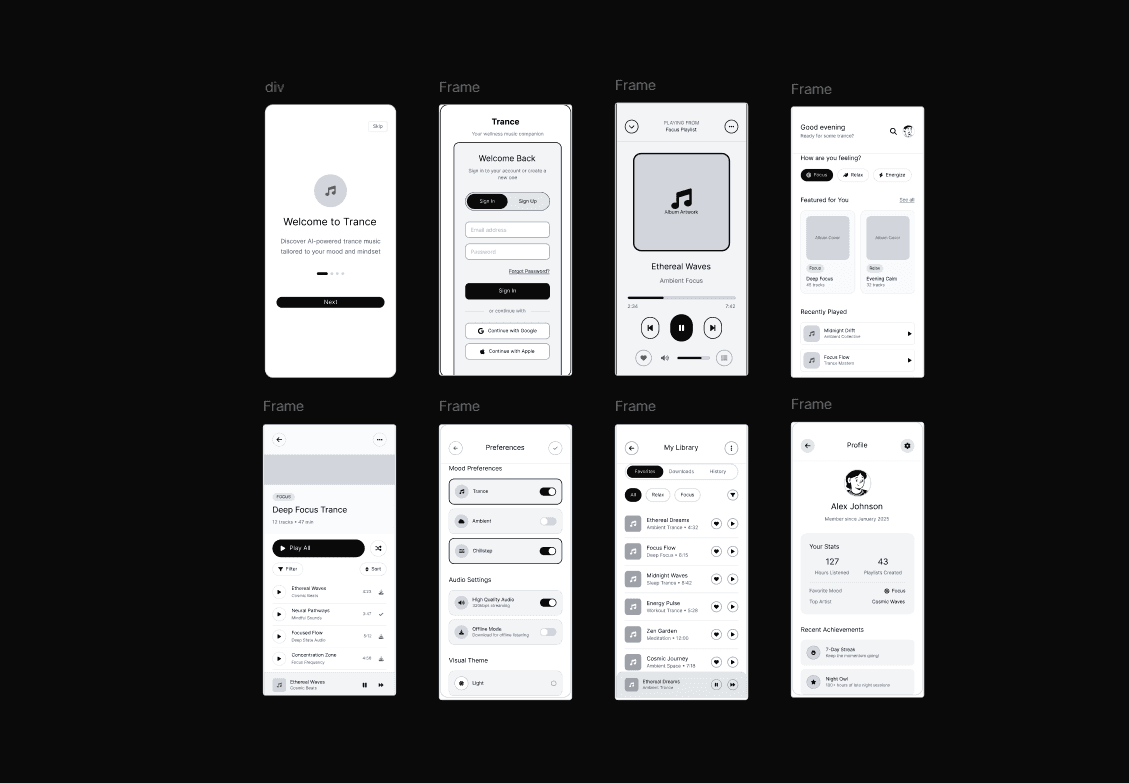
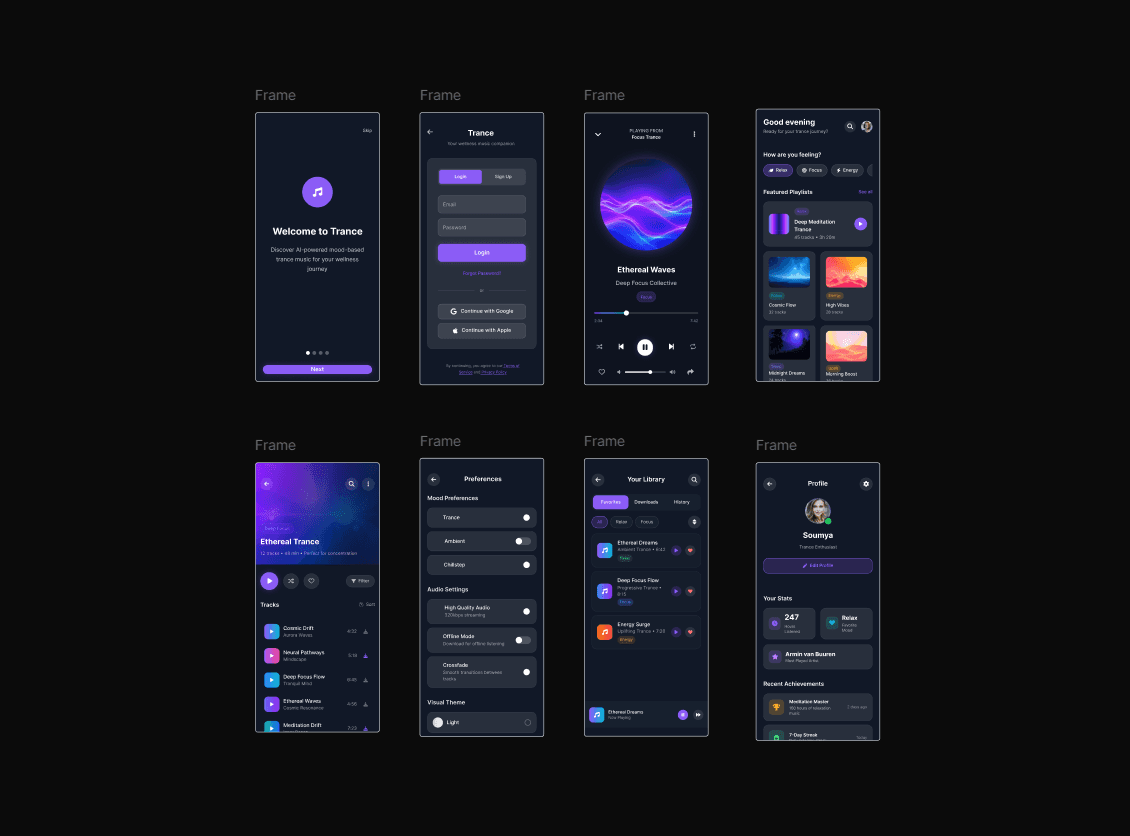
Designed low- and high-fidelity wireframes, applying visual hierarchy, soft colors, and clean layouts to create an intuitive and relaxing experience.
Test
Conducted usability testing with real users. Gathered insights, identified pain points, and iterated to improve navigation, mood resonance, and feature clarity.
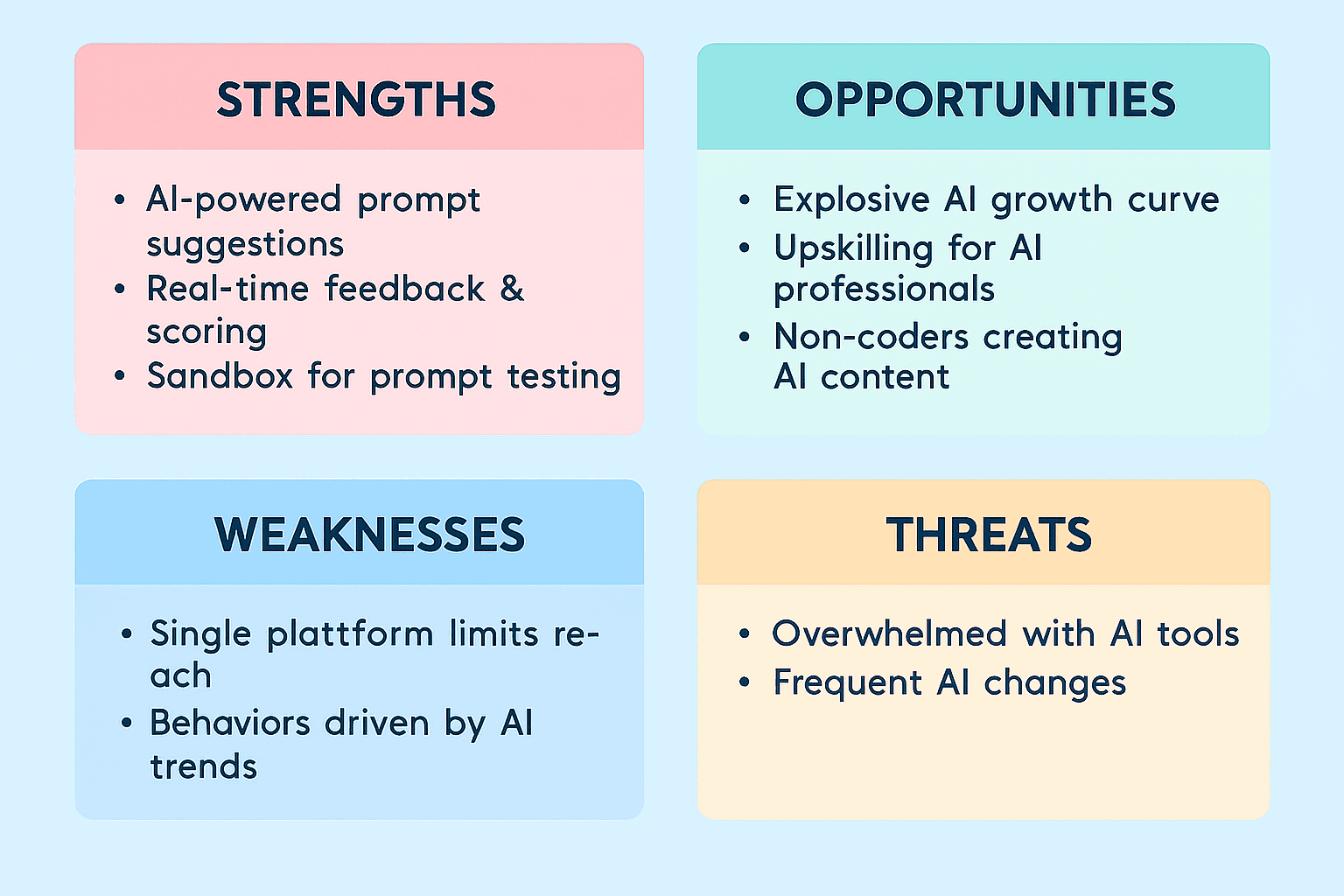
SWOT Analysis
User Surveys & Interviews
To ensure the Trance app would meet real user needs, I conducted both online surveys and in depth interviews with individuals who regularly use music to manage focus, relaxation, and emotional balance.
The surveys helped gather quantitative data on music preferences, daily listening habits, and frustrations with current music platforms. Meanwhile, the interviews allowed for deeper exploration into emotional triggers, usage routines, and desired app features.
Participants ranged from students and professionals to creatives, all of whom shared a desire for an app that felt calming, minimal, and personally attuned to their moods. These insights played a crucial role in shaping the app's design direction and core functionality.
User Takeaways
Users expressed a strong desire for a calm and focused music experience that supports relaxation, study sessions, and emotional balance. Many felt that current music apps were too cluttered, overwhelming, or centered around popularity rather than personalization.
They preferred a minimal interface that eliminates distractions and makes it easy to discover mood based playlists. Features like offline playback, session timers, and a soothing visual theme were consistently highlighted as essential for their ideal listening experience.
These insights confirmed the need for a dedicated platform like Trance one that supports mindfulness and mood driven listening through simplicity and personalization.
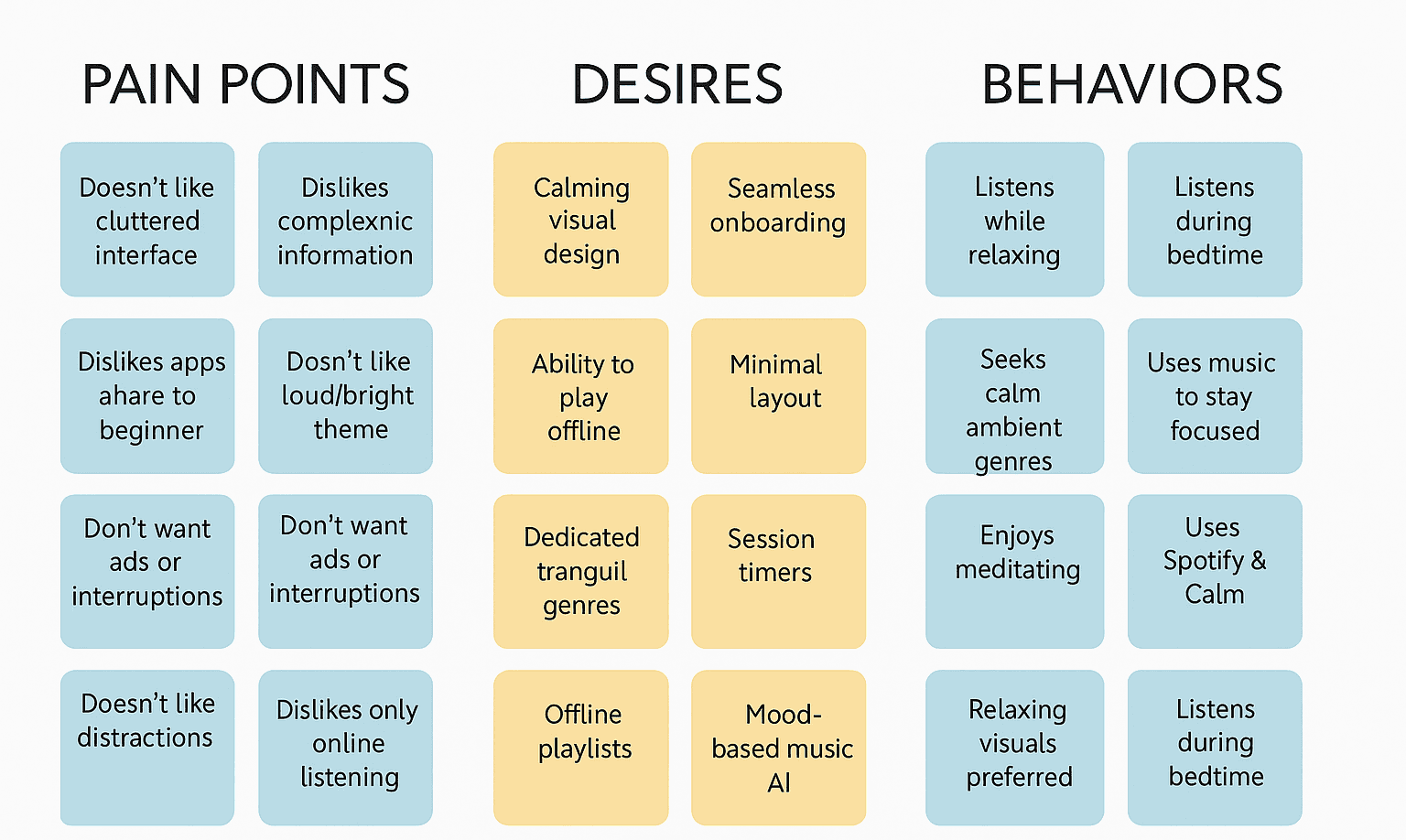
Card Sorts & Affinity Mapping
To better structure the app’s information architecture, I conducted card sorting exercises with participants. Users were given various music app features like playlists, mood selectors, session timers, and personalization settings and asked to group them in ways that felt natural to them. This process helped surface user expectations around navigation and feature placement.
Following the card sort, affinity mapping was used to organize qualitative feedback from surveys and interviews. I grouped common themes such as “emotional clarity,” “minimal distractions,” and “easy access to favorites.” This step highlighted pain points users shared across their experiences with other music apps and clarified what features should be prioritized.
Both methods were key in forming a structure that aligns with how users think and feel, ensuring Trance delivers a calming and intuitive experience from the ground up.
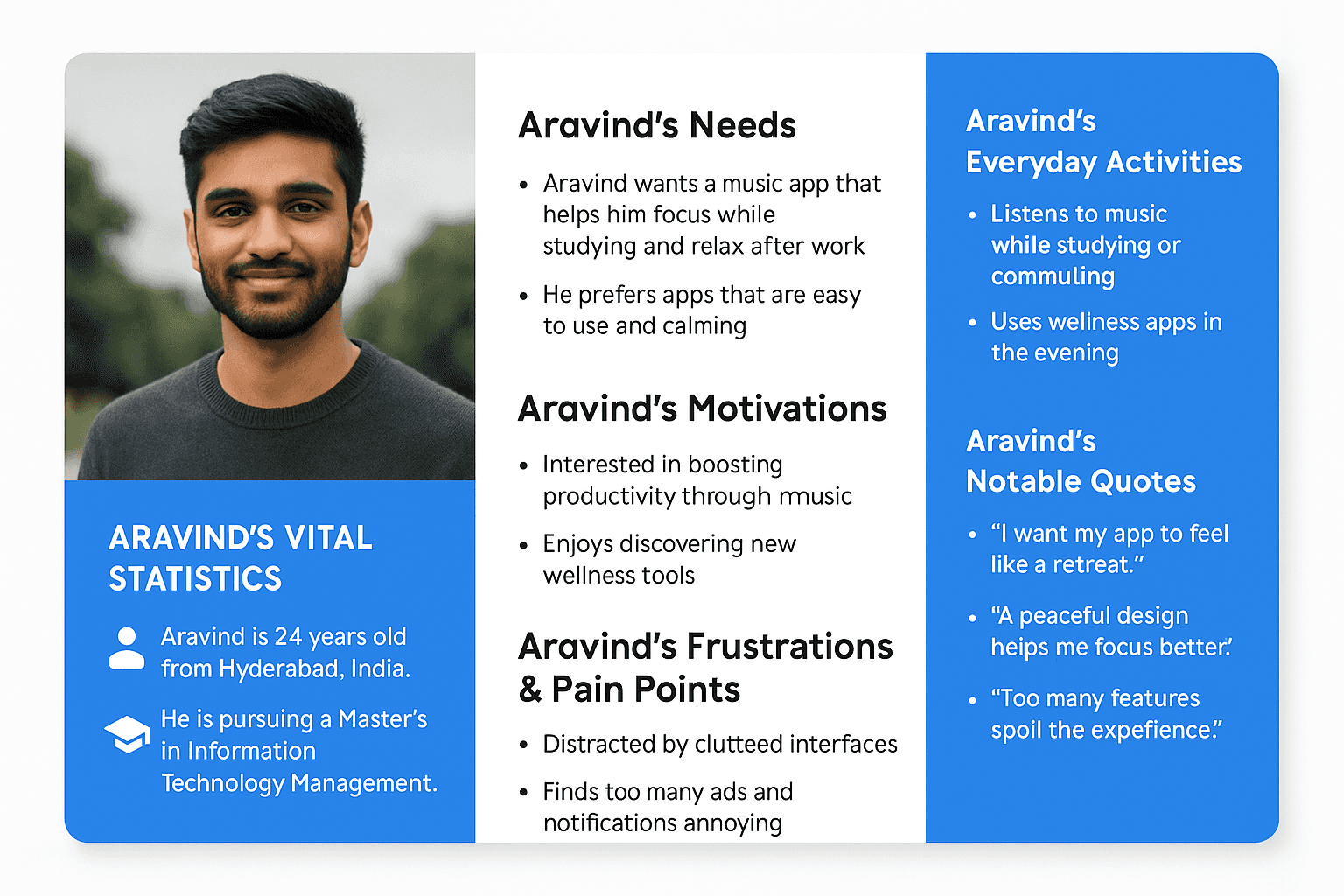
Meet the users: Personas , Journeys
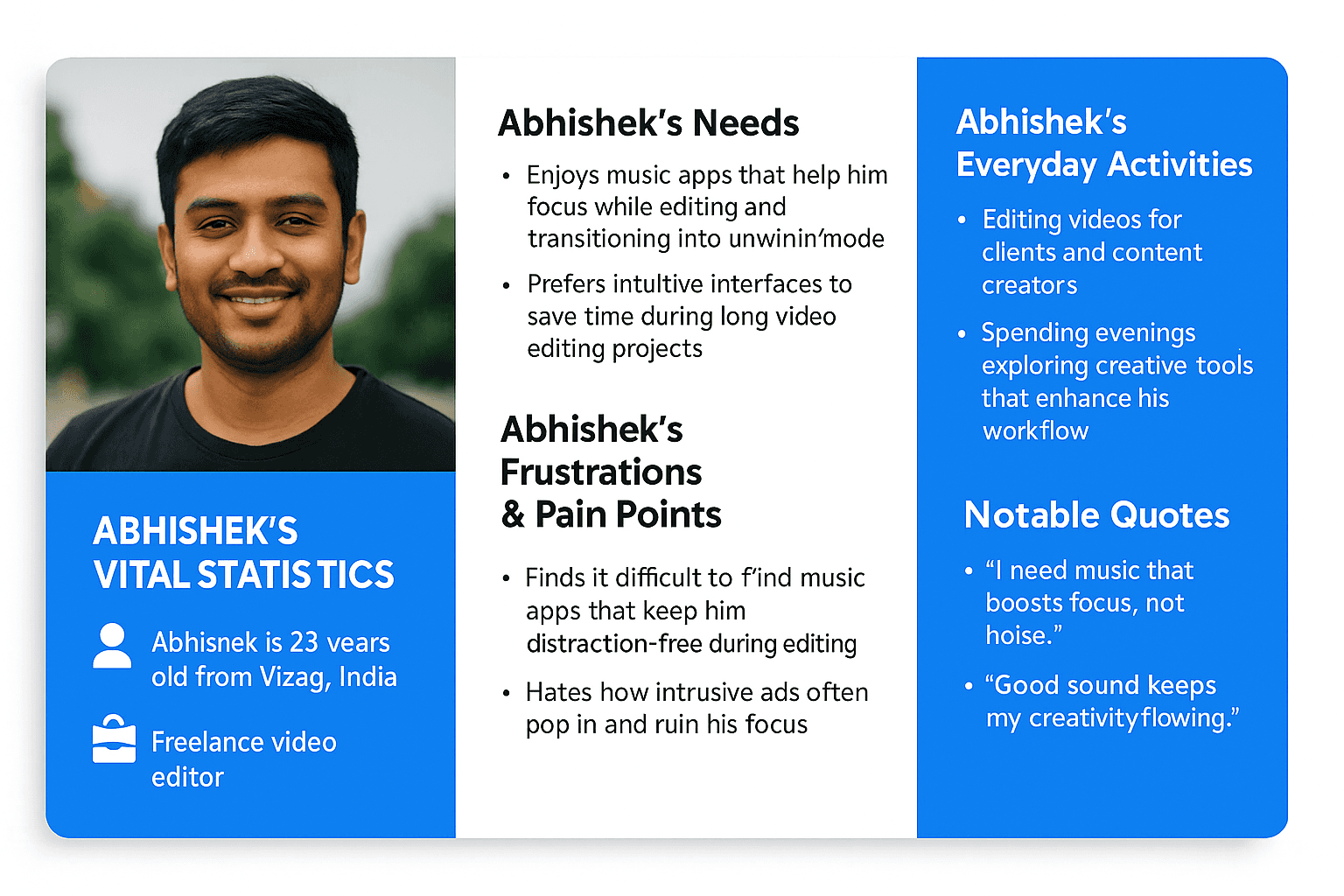
To guide the design process, I created user personas based on interviews and survey data. These personas included students, working professionals, and music lovers who use sound to manage focus, relaxation, or emotions.
Each persona reflected unique goals and pain points like needing quick mood based playlists or avoiding overwhelming interfaces. These details helped tailor features to real user needs.
I also mapped out their user journeys to understand how they would naturally interact with the app. This helped shape intuitive flows that support emotional wellness through personalized music experiences.
Usability Testing
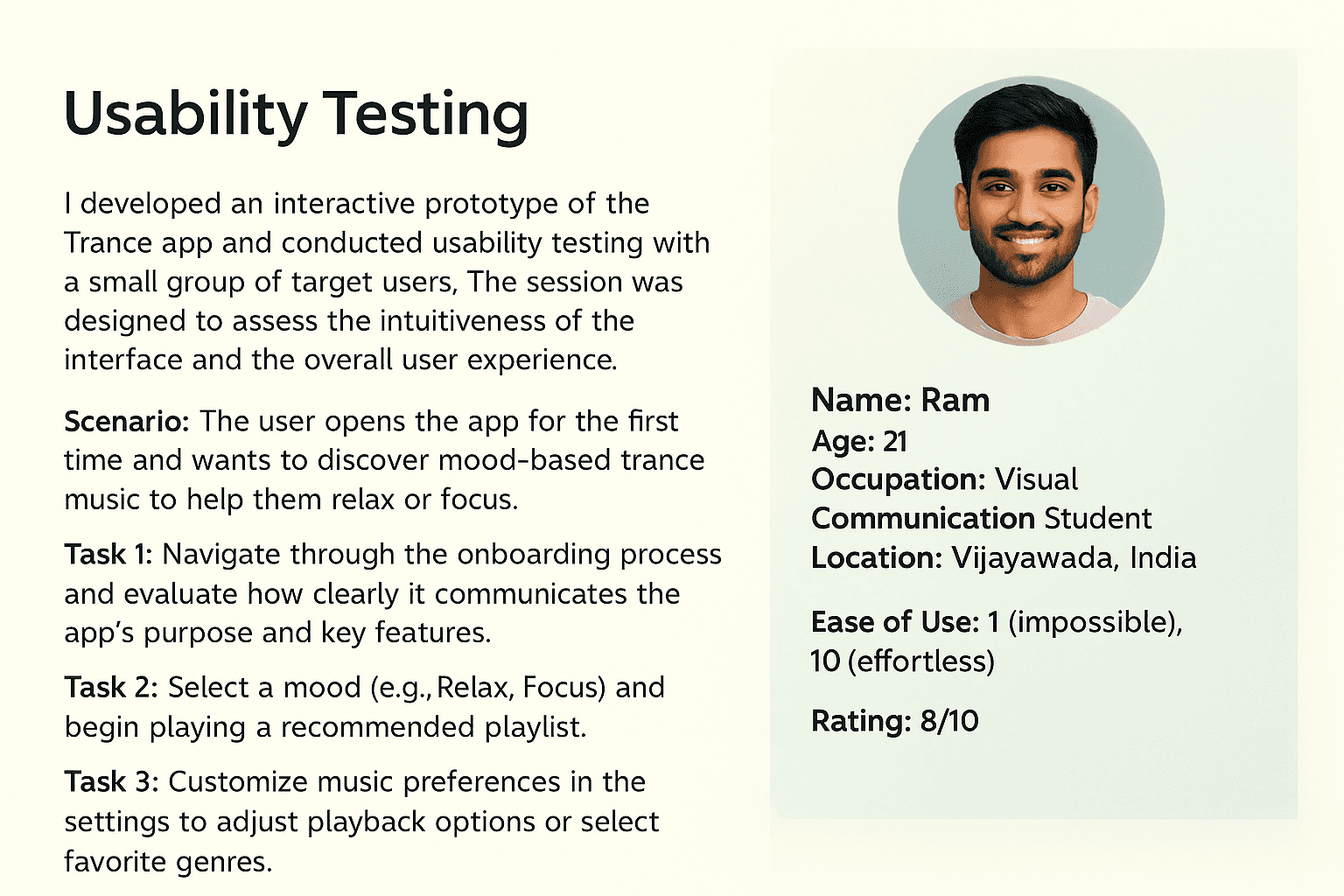
Once the prototype was ready, I conducted usability testing with a small group of users who regularly use music apps. They were asked to complete common tasks like selecting a mood based playlist or adjusting audio settings.
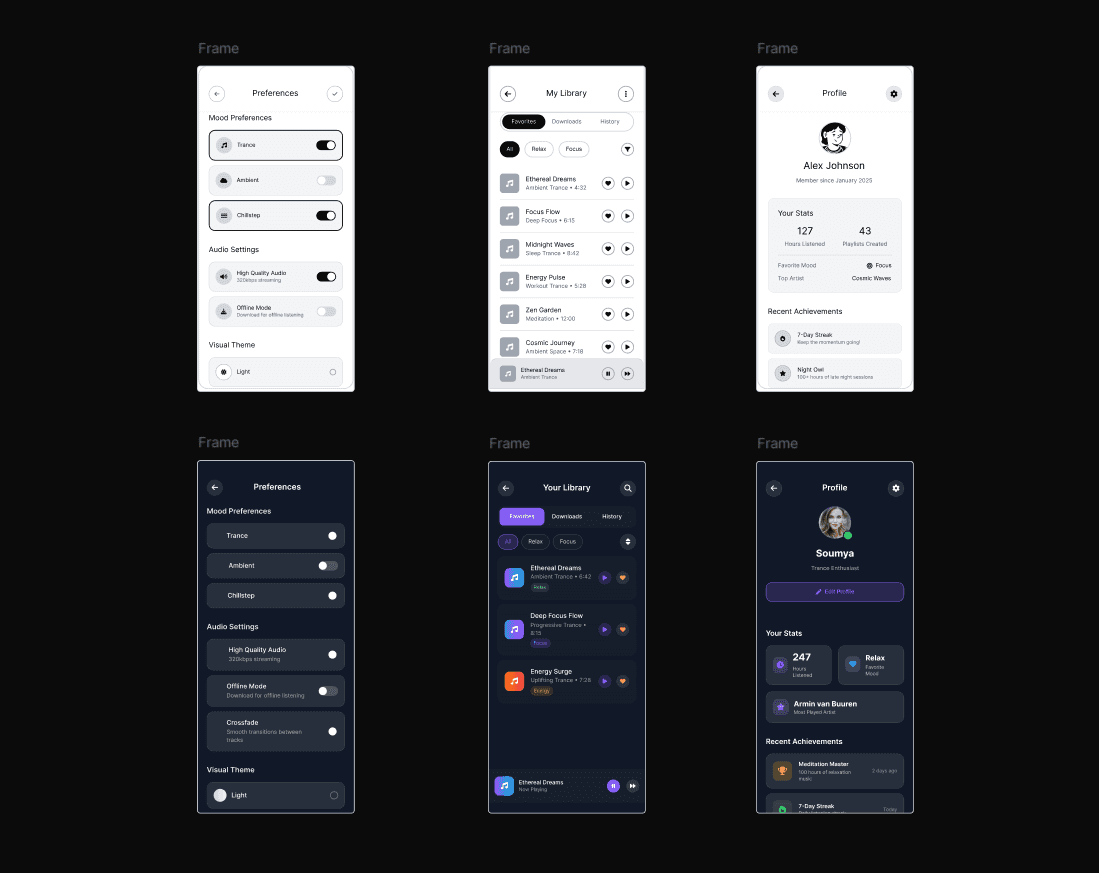
The feedback highlighted areas where navigation felt unclear, particularly in the preferences screen. Users also requested quicker access to playback controls and more visible visual cues.
Based on these insights, I made improvements such as refining button hierarchy, improving labels, and enhancing overall flow. The result was a smoother, more intuitive user experience.
Results
The final outcome of the Trance app was a functional prototype that delivered a calm, personalized music experience based on user moods. Features like mood driven playlists, minimal UI, and offline playback were well received during testing.
Users appreciated the simplicity and emotional tone of the design. They found the app intuitive and engaging, particularly noting how quickly they could get into a relaxed or focused state using the mood filters.
One small issue was the lack of onboarding clarity, which I plan to improve in future iterations. Overall, this project helped me grow in UI design, user research, and iterative testing building a product that truly resonated with user needs.
What Trance Taught me
Trance taught me the value of designing with emotion and clarity. I learned how powerful simplicity can be when it's backed by real user insight. From research to final prototypes, every step reinforced the importance of listening to users and creating calm, purposeful experiences. This project sharpened my skills in building intuitive flows, mood based design, and user testing reminding me that even small design decisions can deeply influence how users feel.
Paper Wireframes
Digital Wireframes
High - Fidelity Screens
Tools Used